Among midwestern states, the bobcat is protected in Iowa, Illinois, Indiana, Ohio, and in most counties of Kentucky. It is managed as a furbearer or game animal in the plains states. Western states generally exempt depredating bobcats from protected status. They can usually be killed by landowners or their agent. In the more eastern states and states where bobcats are totally protected, permits are required from the state wildlife agency to destroy bobcats. Consult with your state wildlife agency regarding local regulations and restrictions.Â
Month: May 2007
Trapping Grizzly Bear
The capture and translocation of bears can be effective in damage control. Unfortunately, relocation often only moves the problem to another site, and bears have been known to travel great distances to return to a trapping site. The handling process, if done correctly, is itself sufficiently traumatic to teach the bears to avoid humans. Use culvert traps or foot snares to capture bears. Continue reading Trapping Grizzly Bear
Identifying Grizzly Bear Sign and Damage
Brown (grizzly)Â bears have many unique behaviors that subject them to situations in which they are perceived as a threat to humans or personal property. They are opportunistic feeders that may switch to scavenging human-produced food and garbage if made available, becoming a problem around parks, camp grounds, cottages, suburban areas, and garbage dumps. Bears that are conditioned to human foods become used to the presence of humans and are therefore the most dangerous. Continue reading Identifying Grizzly Bear Sign and Damage
Idenifying Badger Sign
Most damage caused by badgers results from their digging in pursuit of prey. Open burrows create a hazard to livestock and horseback riders. Badger diggings in crop fields may slow harvesting or cause damage to machinery. Digging can also damage earthen dams or dikes and irrigation canals, resulting in flooding and the loss of irrigation water. Diggings on the shoulders of roads can lead to erosion and the collapse of road surfaces. In late summer and fall, watch for signs of digging that indicate that young badgers have moved into the area. Continue reading Idenifying Badger Sign
Calling and Shooting Coyotes
Coyotes may respond to predator calls. Calling, like other methods of predation control, should be used sparingly and only when needed. Coyotes can be called at any time of the day although the first couple of hours after dawn and the last few hours before darkness are usually best. Call in areas where there are signs of coyotes, such as tracks or droppings. Continue reading Calling and Shooting Coyotes
About the Grizzly Bear
Although wildlife management concepts have been around, bears and their management have been poorly understood to date. Recent concern for the environment, species preservation, and ecosystem management are only now starting to affect the way we manage grizzly bears (Ursus arctos). By the way, Grizzly bears are the same as brown bears.
The difficulty in understanding brown bear biology, behavior, and ecology may have precluded sufficient change to prevent the ultimate loss of the species south of Canada. Grizzly bears must be managed at the ecosystem level. The size of their ranges and their need for safe corridors between habitat units bring them into increasing conflict with people, and there seems to be little guarantee that people will sufficiently limit their activities and land-use patterns to reduce brown bear damage rates and the consequent need for damage control. Drastic changes may be needed in land-use management, zoning, wilderness designation, timber harvest, mining, real estate development, and range management to preserve the species and still meet damage control needs.
Trapping Badgers Using Live Traps
Badgers are strong animals that can cause a lot of damage. They can den under homes and buildings and create problems for residents. The successful trapping of badgers can eliminate or prevent these problems. Badgers can be removed by using live traps and/or foothold traps set like those for coyotes. Snares have been used with mixed success, but they can be effective in the right situations.
Badgers often return to old diggings, so this is always a great place to trap. A good bait for badgers is a dead chicken placed within a recently dug burrow. Fur trapping may reduce badger populations locally, but badger pelts are generally of little value and most badgers are caught incidentally.
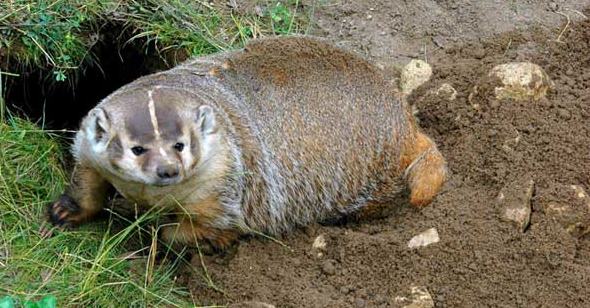
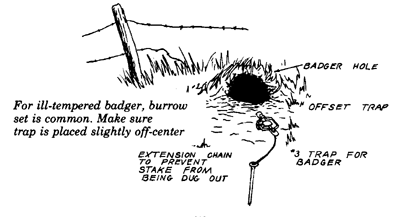
Foothold traps in the sizes #3 or #4 are adequate to hold even a large badger. However, rather than staking the trap to the ground, it is better to attach it to a drag such as a strong limb or similar object that the badger cannot pull down into its burrow. The problem with stationary stakes is that badgers will often dig in a circle around a stake, sometimes enough to loosen the stake and drag the trap away.
Badgers are neat animals when living in their natural habitat, but removal through trapping is sometimes necessary for both the badger and people. Before trapping, I recommend trying to “bother” the badger with enough activity to push the animal out of the area. This can include the continuous playing of a radio close to their den or continual filling in of their den. This harassment may be enough to get the badger to leave the area and move off to better, more appropriate habitat.